Free English book · Revised illustrated edition
Philosophy of Major Trauma
Mechanisms, judgement and organised care from resuscitation to recovery
A book about the decisions that connect survival with recovery: recognising immediate threats, matching treatment to physiology, and helping the injured person return to everyday life.
111 pages · 10 chapters + introduction · 19 integrated figures
Revised 13 October 2026 · English · PDF, 8.2 MB
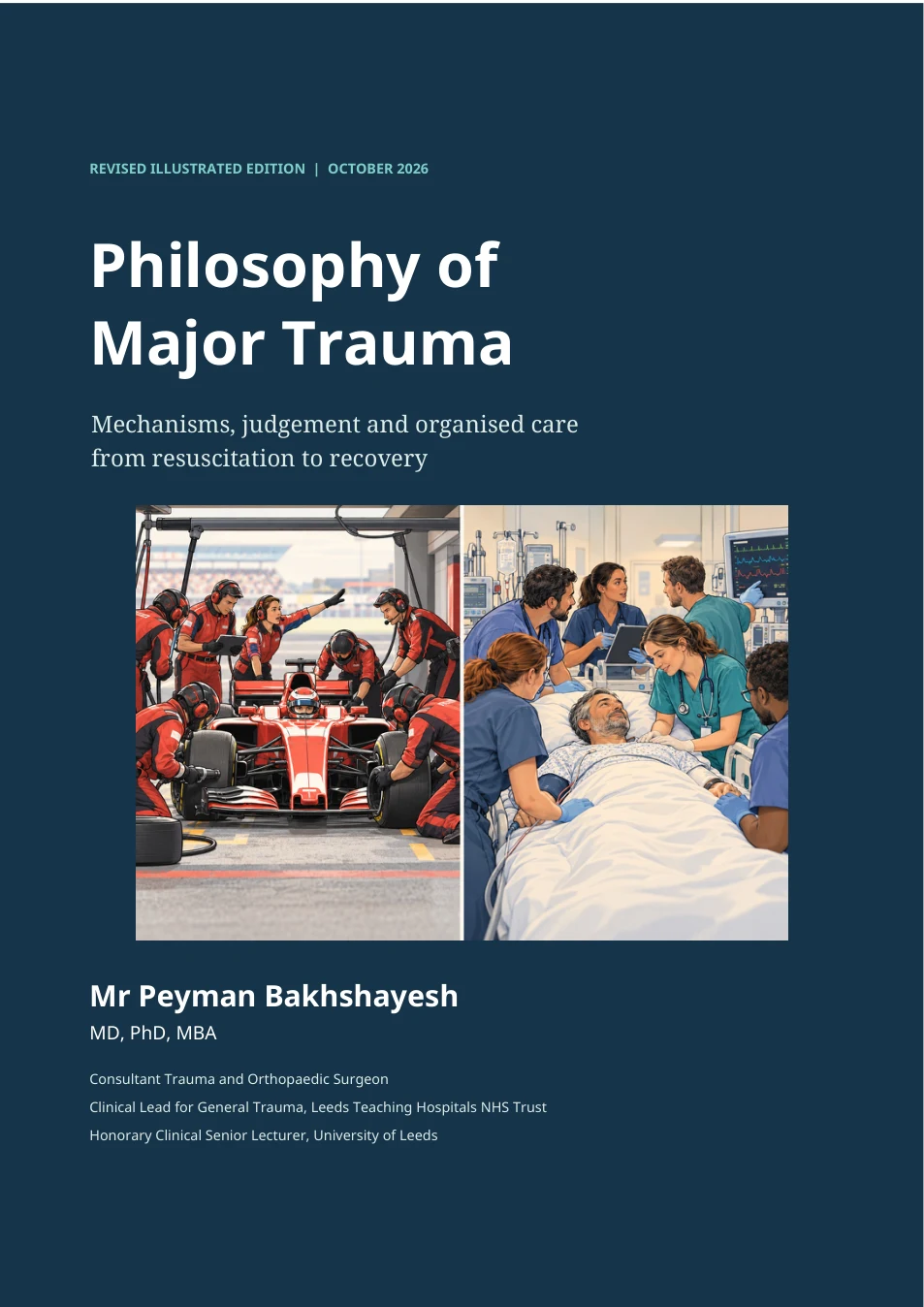
From the first assessment to life after injury
The revised illustrated edition connects an understanding of injury mechanisms with the injured person, prepared services and effective teamwork. It follows early appropriate care, early total care and damage control through head and neck, chest, abdominal, pelvic, spinal, plexus, vascular and extremity injuries, then rehabilitation and functional return.
Written for healthcare professionals and learners. Educational discussion supports clinical judgement; it does not replace current local protocols, specialist advice or individual assessment.
Contents
Choose a chapter to open its first page in the PDF.
- IntroductionA philosophy of coordinated trauma care5
- Chapter 1Early care in major trauma12
- Chapter 2Head and neck injuries22
- Chapter 3Thoracic injuries31
- Chapter 4Abdominal trauma42
- Chapter 5Pelvic trauma53
- Chapter 6Spine and spinal precautions64
- Chapter 7Plexus injuries76
- Chapter 8Vascular injuries86
- Chapter 9Extremity injuries95
- Chapter 10Rehabilitation and functional return103
About this edition
This revised illustrated edition includes 11 conceptual cartoons, five clinical figure plates and three anatomical nerve and plexus illustrations, integrated within the chapters. Clinical discussion is supported by references, classification tables, continuous page numbers, a linked contents page and PDF bookmarks.
Copyright © 2026 Mr Peyman Bakhshayesh. Institutional affiliations identify the author’s roles and do not imply institutional endorsement.