
Clinical philosophy · Illustrated book
Immediate Weight Bearing
After Foot and Ankle Surgery
Stable fixation, careful selection and a clear plan for recovery.
Planning for mobility
By Mr Peyman Bakhshayesh, MD, PhD, MBA
Consultant Trauma and Orthopaedic Surgeon.
My preferred approach is to build a stable reconstruction and allow weight bearing immediately, or as soon as the individual operation and healing tissues permit. The aim is to help people recover function while balancing the risks of loading against the practical difficulties of prolonged offloading.
This illustrated clinical book develops that philosophy through anatomy, biomechanics, procedure-specific evidence and rehabilitation decisions.
Read the complete book
The book distinguishes immediate from early loading, and protected walking from unrestricted use of the foot. It considers ankle-fracture fixation, ankle and hindfoot fusion, ankle replacement, midfoot and Lisfranc procedures, Lapidus surgery, forefoot osteotomies and lesser-toe operations.
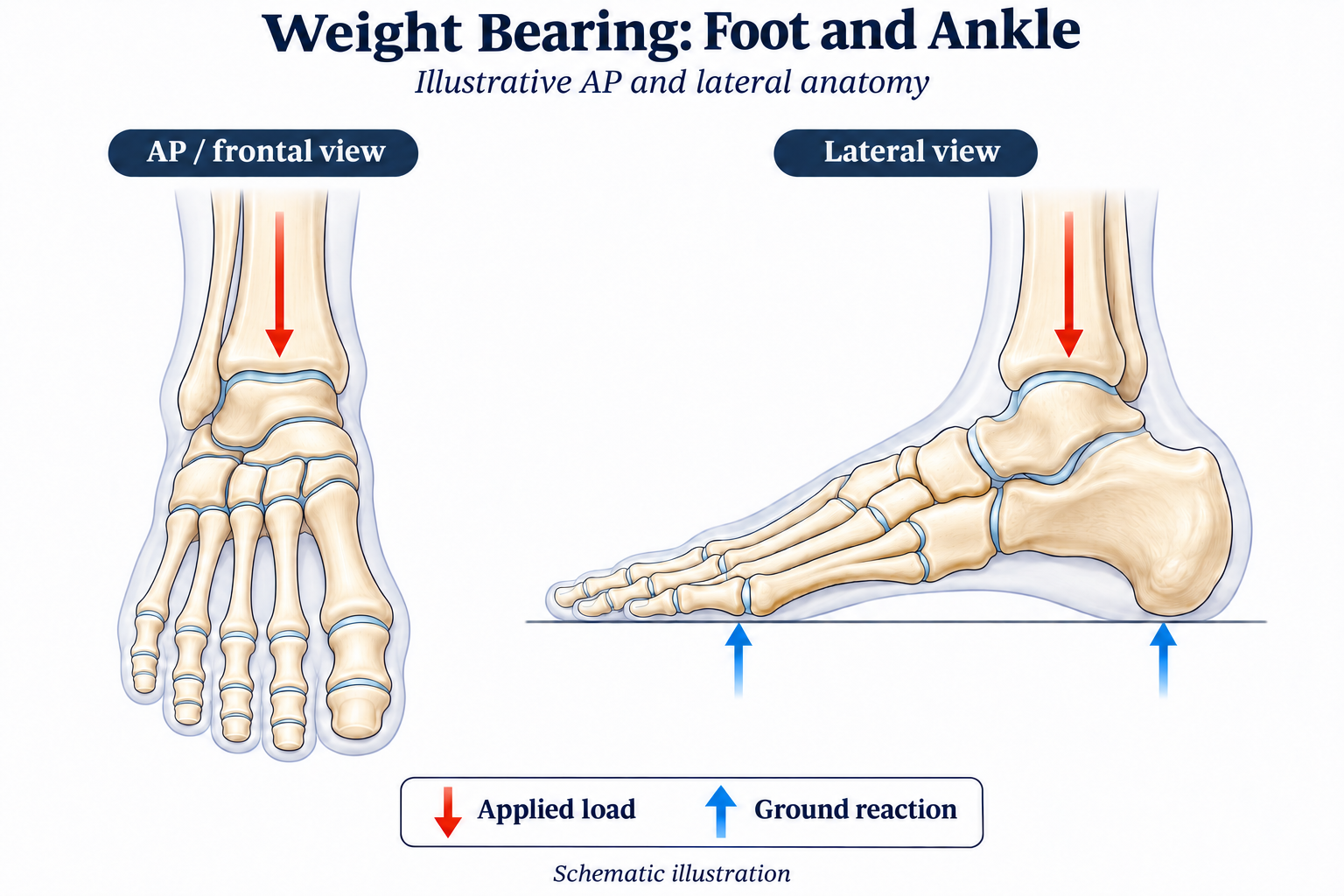
Within the book
Mechanics and healing
- Fixation strength, joint preparation, alignment and bone quality.
- How the operation and the chosen construct affect the loading plan.
- Protection of wounds, soft tissues, fusion sites and implants.
- Walking aids, footwear, push-off restrictions and practical mobility.
Evidence and judgement
An individual prescription
Chapter 5 examines ankle-fracture fixation, including the WAX and INWN trials. This evidence is discussed separately from elective fusion, replacement and forefoot surgery. Published findings, biomechanical reasoning and the author’s preferred practice are identified as different sources of clinical judgement.
This is a narrative clinical monograph. It does not establish one universal immediate weight-bearing protocol. Each rehabilitation plan should specify when loading starts, what protection is needed, which activities are permitted and when the plan will be reviewed.
For patients and clinicians
Patients should follow the written plan from their own treating team. Wound healing, infection, bone quality, other procedures performed at the same operation and the ability to walk safely can change that plan.
Early mobilisation does not replace individual assessment for venous thrombosis or the prescribed preventive measures.