Regenerative care
Platelet-rich plasma (PRP)
Your own blood platelets, concentrated for selected musculoskeletal injections. Explore condition-specific evidence, realistic expectations and rehabilitation. Benefit varies by diagnosis. PRP is not a proven way to regrow cartilage or reverse arthritis.
Download your resources
Consent templates support a clinician-led discussion. They do not replace the hospital consent process.
What PRP aims to do
PRP uses a concentrated sample of your own blood platelets. The aim is to reduce symptoms in selected conditions alongside rehabilitation. Improvement is uncertain; it is not a proven way to regrow cartilage, reverse arthritis or avoid surgery.
What is platelet-rich plasma?
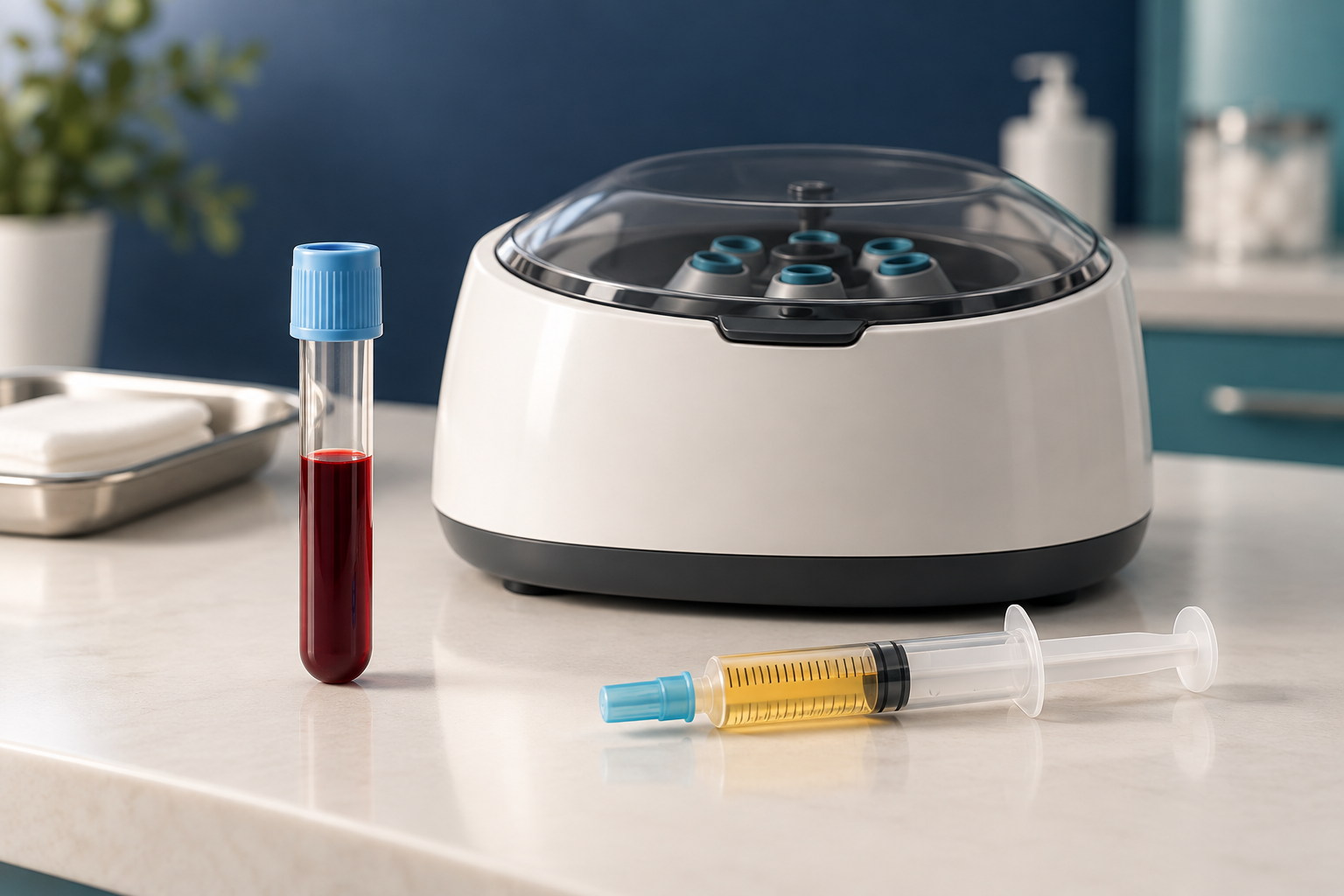
A small blood sample is taken from a vein and processed in a centrifuge. Part of the plasma, containing concentrated platelets, is collected for injection. Platelets release signalling proteins involved in tissue repair. This biological explanation does not prove that an injection will improve your condition.
Preparations differ in platelet concentration, white-cell content and processing method. Results from one preparation or body part cannot automatically be applied to another.
What happens at the appointment?
- Your diagnosis, symptoms, examination and relevant imaging are reviewed. The clinician confirms the target and side with you.
- The skin is cleaned and blood is taken and processed. The PRP is injected using sterile technique; ultrasound may guide the needle where appropriate. Any local anaesthetic or tendon needling is discussed separately.
- You may feel pressure or discomfort. Afterwards you receive a dressing, an individual activity plan and follow-up arrangements. The number of injections is agreed in advance; a course does not guarantee a better result.
Before deciding
- Tell the team about infection, recent fever, antibiotics, allergies, pregnancy, diabetes, immune suppression, cancer or blood/platelet disorders.
- Bring a full medication list, especially aspirin, clopidogrel, warfarin, apixaban or other blood thinners, anti-inflammatory medicines and supplements.
- Do not stop prescribed medicines yourself. Any change must be agreed with the prescribing clinician, balancing bleeding risk against the reason for treatment.
- Ask about the complete cost, whether physiotherapy and review are included, and the plan if treatment fails.
The evidence depends on the condition
- Knee osteoarthritis: Studies give mixed results. The 2026 ACR summary strongly recommends against PRP for knee and hip osteoarthritis, with low-certainty evidence. NICE HTG497 requires special governance, consent and audit or research arrangements; this is not an endorsement of efficacy. RESTORE found no significant advantage over saline for pain or cartilage volume at 12 months.
- Ankle osteoarthritis: A placebo-controlled trial found no significant improvement over saline at 26 weeks. This does not support routine PRP for ankle arthritis. Knee findings should not be transferred to the ankle.
- Midportion Achilles tendinopathy: A large UK trial found no benefit over sham injection at six months. Progressive loading and an individual rehabilitation programme remain central.
- Persistent plantar heel pain: Some trials suggest longer-term improvement compared with corticosteroid. Protocols and study limitations mean response remains uncertain; loading, footwear and rehabilitation are still important.
- Other tendon problems: Effectiveness varies by tendon and diagnosis. NICE HTG299 also requires special arrangements because efficacy evidence is inadequate. Evidence for one tendon does not establish effectiveness for all tendon problems.
Alternatives and expected outcomes
Options may include observation, activity adjustment, strengthening and physiotherapy, weight management when appropriate, footwear or orthoses, suitable pain relief, condition-specific injections, shockwave therapy for some conditions, or surgery when indicated. You can choose not to have an injection.
If symptoms improve, the change is usually assessed over weeks to months rather than immediately. Some patients obtain no useful benefit or have a temporary flare. Benefit may wear off, and further treatment or surgery may still be needed. Agree a measurable goal such as walking distance, sleep or return to an activity.
Risks and when to seek help
Pain, a temporary flare, bruising and bleeding can occur. Infection, injury to nearby structures and reaction to an added medicine or skin preparation are less common but potentially serious. Your own blood does not eliminate these risks.
Seek urgent assessment for a hot swollen joint, spreading redness, discharge, fever or severe increasing pain. Call 999 for breathing difficulty, collapse, chest pain or a severe allergic reaction.
Recovery and follow-up
Your clinician will give a site-specific loading and rehabilitation plan. Do not stop prescribed medicines independently. Agree when to review symptoms and function, and what to do if the treatment does not help. The separate aftercare guide includes warning signs and a discharge-plan record.
Further reading & sources
- NICE HTG497: Platelet-rich plasma injections for knee osteoarthritis (23 January 2019 (formerly IPG637))
- ACR: 2026 update of recommendations for knee, hip and hand osteoarthritis - guideline summary (Approved 8 September 2026; posted 14 September 2026; full journal manuscript pending)
- NICE HTG299: Autologous blood injection for tendinopathy (23 January 2013 (formerly IPG438))
- Bennell et al. RESTORE: PRP versus placebo for knee osteoarthritis. JAMA (23 November 2021)
- Paget et al. PRP versus placebo for ankle osteoarthritis. JAMA (26 October 2021)
- Kearney et al. PRP versus sham for chronic midportion Achilles tendinopathy. JAMA (13 July 2021)
- Peerbooms et al. PRP versus corticosteroid for plantar fasciitis. American Journal of Sports Medicine (2019)
- Royal National Orthopaedic Hospital: A patient's guide to PRP blood injection (Page updated 20 November 2025)
Prepared 10 October 2026 for the practice of Mr Peyman Bakhshayesh. Professional background. General patient education; your clinical assessment and written instructions determine your care.
Private care in Huddersfield
Let’s talk about your next step.
Arrange an appointment to discuss your concerns and the options available to you.