Regenerative care
Bone marrow aspirate concentrate (BMAC)
A concentrated mixture from your own bone marrow. Learn how collection, evidence, risks and recovery differ from a routine injection. BMAC is not a pure cultured stem-cell treatment. It has additional harvest-site risks and uncertain indication-specific benefit.
Download your resources
Consent templates support a clinician-led discussion. They do not replace the hospital consent process.
A more invasive procedure with uncertain benefit
BMAC requires a bone-marrow harvest as well as treatment at the target site. Its benefit must be assessed for your particular diagnosis. It is not a proven cartilage-regrowth treatment or a guaranteed alternative to surgery.
What is bone marrow aspirate concentrate?
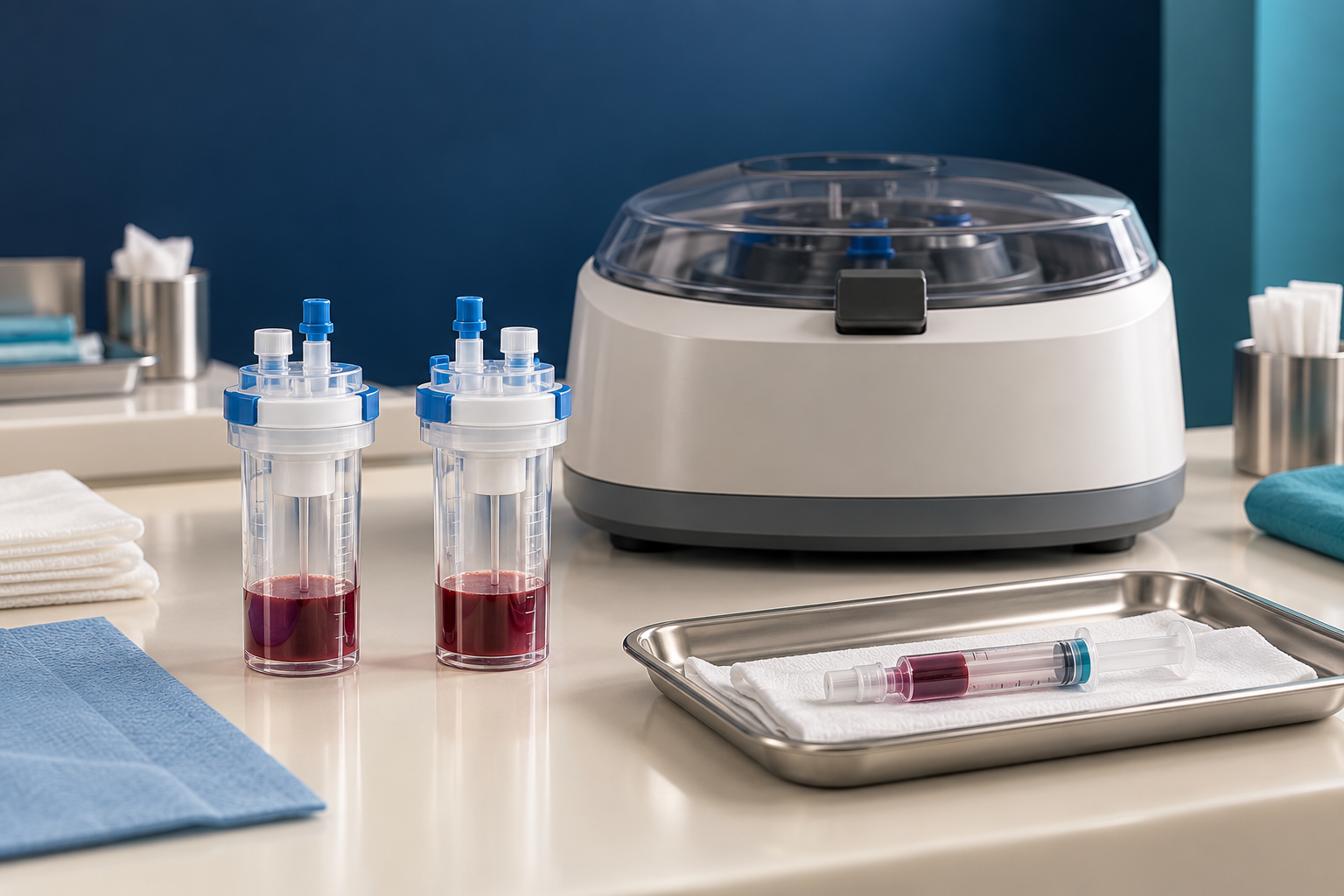
Bone marrow is the tissue inside bone that produces blood cells. Liquid marrow is withdrawn through a needle, most often from the pelvic bone, and processed to concentrate some of its cells and proteins. The concentrated preparation is then injected or applied during an operation.
BMAC contains a mixture of cells, platelets and signalling proteins. Only a small proportion of its cells are stromal/progenitor cells. Same-day BMAC is different from purified or laboratory-cultured cell treatments. Calling it simply a stem-cell injection can give a misleading impression of its composition and proven effects.
What happens?
- Assessment confirms your diagnosis, treatment target, reasonable alternatives, and why marrow harvesting is being considered.
- The harvest site is cleaned and anaesthetised. Marrow is aspirated through a needle into the bone. You may still feel pressure or a brief deep ache during aspiration.
- The marrow is processed in a specified system and used at the agreed target. Ultrasound, X-ray guidance or surgery may be needed, depending on the indication.
- The harvest and treatment sites are dressed. Local anaesthetic, sedation or general anaesthesia are planned individually. If BMAC accompanies surgery, the operation has its own consent and rehabilitation plan.
Important preparation
Tell the team about blood disorders, low blood counts, bleeding or clotting problems, infection, immune suppression, cancer, pregnancy, medication allergies and previous anaesthetic problems. Medication changes, fasting and transport instructions depend on your plan. Do not stop anticoagulants, aspirin or other prescribed medicines yourself.
Different uses have different evidence
- Knee osteoarthritis injection: Clinical benefit beyond other injections remains uncertain. A small saline-controlled trial found similar pain improvement in both knees. A larger 2023 trial found no superiority of BMAC over corticosteroid at one year and no significant MRI improvement in arthritis score.
- Ankle cartilage lesion surgery: Some cohort studies report encouraging results when BMAC accompanies microfracture or cartilage procedures. This is evidence about a combined operation, not proof that an isolated BMAC injection regrows cartilage.
- Delayed union or nonunion: Marrow concentrates have been studied as an adjunct in selected noninfected nonunions. Study design and patient selection limit certainty. Stability, alignment, infection control and other biological needs remain essential.
- Other joints and tendon problems: The evidence cannot be assumed equivalent to knee or bone-healing research. Ask what research directly supports the exact body part, diagnosis and procedure being proposed.
Alternatives, costs and expectations
Depending on the diagnosis, alternatives include continued rehabilitation, load adjustment, suitable medicines, braces or orthoses, other condition-specific injections, or surgery. Nonunion may require revised fixation, infection treatment and bone graft; BMAC does not replace these when they are needed.
Some patients report less pain, but improvement is not assured and may not last. The added harvest, recovery time and cost must be weighed against an uncertain extra benefit. Agree what improvement would justify the procedure and when to reassess.
Risks and oversight
Harvest-site pain, bruising, bleeding and infection are additional risks. Persistent pain and injury to nearby structures are possible. Treatment-site infection, flare, bleeding and needle injury can also occur. Anaesthetic and surgical risks depend on the accompanying procedure.
The exact processing and use determine the applicable UK regulatory arrangements. A device marking or the use of your own marrow does not prove effectiveness for arthritis. The treating service must confirm appropriate governance for the proposed procedure.
Recovery and follow-up
Both the harvest and treatment sites need care. Weight-bearing and exercise restrictions depend on the diagnosis and any accompanying surgery. Obtain a written medication, dressing and rehabilitation plan. Attend the agreed clinical and imaging review; the separate aftercare guide includes urgent warning signs.
Further reading & sources
- Shapiro et al. BMAC versus saline for knee osteoarthritis. American Journal of Sports Medicine (January 2017)
- Mautner et al. Cell-based versus corticosteroid injections for knee osteoarthritis. Nature Medicine (2 November 2023; author correction 22 December 2023)
- AAOS: Concentrated bone marrow aspirate for knee osteoarthritis - technology overview (Approved 3 December 2021; evidence search to 14 March 2021)
- Murphy et al. BMAC and microfracture for osteochondral lesions of the talus. Foot and Ankle Surgery (August 2019)
- Hernigou et al. Percutaneous autologous bone-marrow grafting for tibial nonunion. JBJS American (July 2005)
- MHRA: Advanced therapy medicinal products - regulation and licensing in UK (Updated 11 September 2026)
- Cambridge University Hospitals: Bone marrow aspiration and trephine biopsy (Current online patient information; accessed 10 October 2026)
Prepared 10 October 2026 for the practice of Mr Peyman Bakhshayesh. Professional background. General patient education; your clinical assessment and written instructions determine your care.
Private care in Huddersfield
Let’s talk about your next step.
Arrange an appointment to discuss your concerns and the options available to you.