New illustrated book · Free English PDF
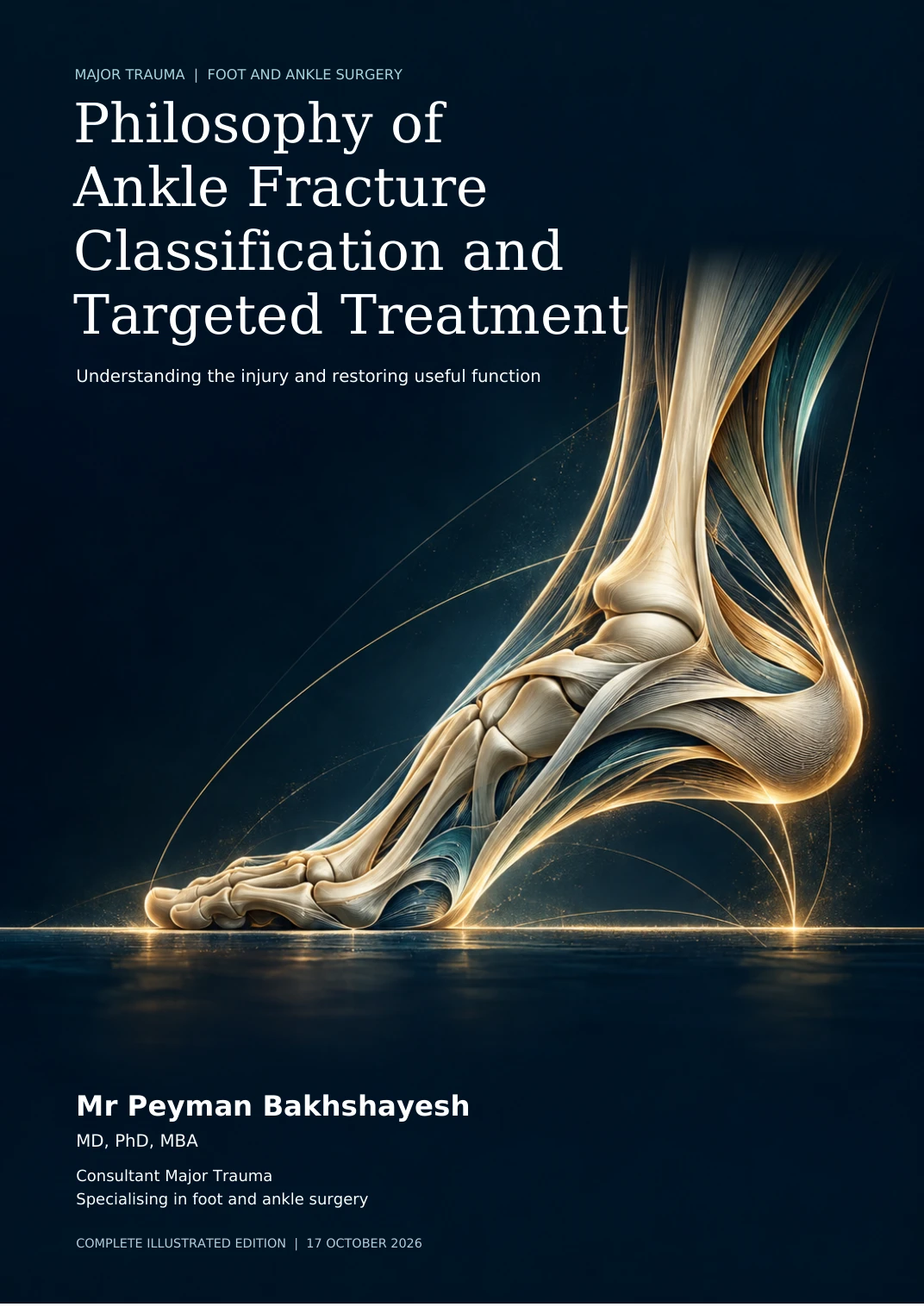
Philosophy of Ankle Fracture Classification and Targeted Treatment
Understanding the injury. Restoring stability. Recovering a meaningful life.
From the injury mechanism to the treatment plan
An ankle fracture is part of a moving, load-bearing system. This book connects functional anatomy and patho-biomechanics with diagnosis, classification and the choices that shape treatment.
Mr Bakhshayesh brings together his clinical philosophy, supplied chapters, preliminary work on atypical fractures, clinical images and current references. The discussion follows surgical timing, planning and approaches through rehabilitation, persistent symptoms and the responsibilities of medico-legal practice.
Inside the book
A preface and introduction establish the author’s philosophy. A substantial foundations chapter on functional anatomy and patho-biomechanics supports the nine numbered chapters:
- Classification
- Diagnosis
- Timing of ankle fracture fixation
- Surgical planning for ankle fractures
- Rehabilitation after ankle fracture
- Post-traumatic events and their treatment
- Medico-legal aspects of ankle injuries
- The six-pattern framework and targeted treatment
- Clinical reasoning through worked examples
Practical appendices support fracture description, clinical documentation and the use of terminology. References connect the discussion to its underlying sources.
A closer look at atypical ankle fractures
The proposed Bakhshayesh framework brings six patterns into the discussion: pure hyperflexion, hyperflexion with supination, hyperflexion with pronation, pure hyperextension, hyperextension with supination and hyperextension with pronation.
The book explains this developing framework alongside established classifications, observed displacement, CT morphology and the assessment of stability. It distinguishes the author’s preliminary research and proposed extensions from independently validated classification systems.
Clinical images and practical reasoning
Anonymised clinical images from the author’s teaching collection accompany diagrams that explain assessment, reconstruction, timing, rehabilitation and sources of persistent pain. Worked examples bring the person’s needs, the fracture pattern and the treatment decision together.
The illustrations are presented with captions and source context. They support the surrounding discussion and should be interpreted alongside individual clinical assessment.
Related reading
Philosophy of Foot and Ankle Surgery →
About this edition
Written for clinicians, trainees and readers seeking a detailed understanding of ankle fracture care. Personal philosophy, developing research and established evidence are identified in context. Treatment and rehabilitation require individual assessment and current clinical guidance.
This is the author’s professional educational publication. Institutional appointments do not imply endorsement by an employer, hospital or university.