
Illustrated clinical book · First edition · Free PDF
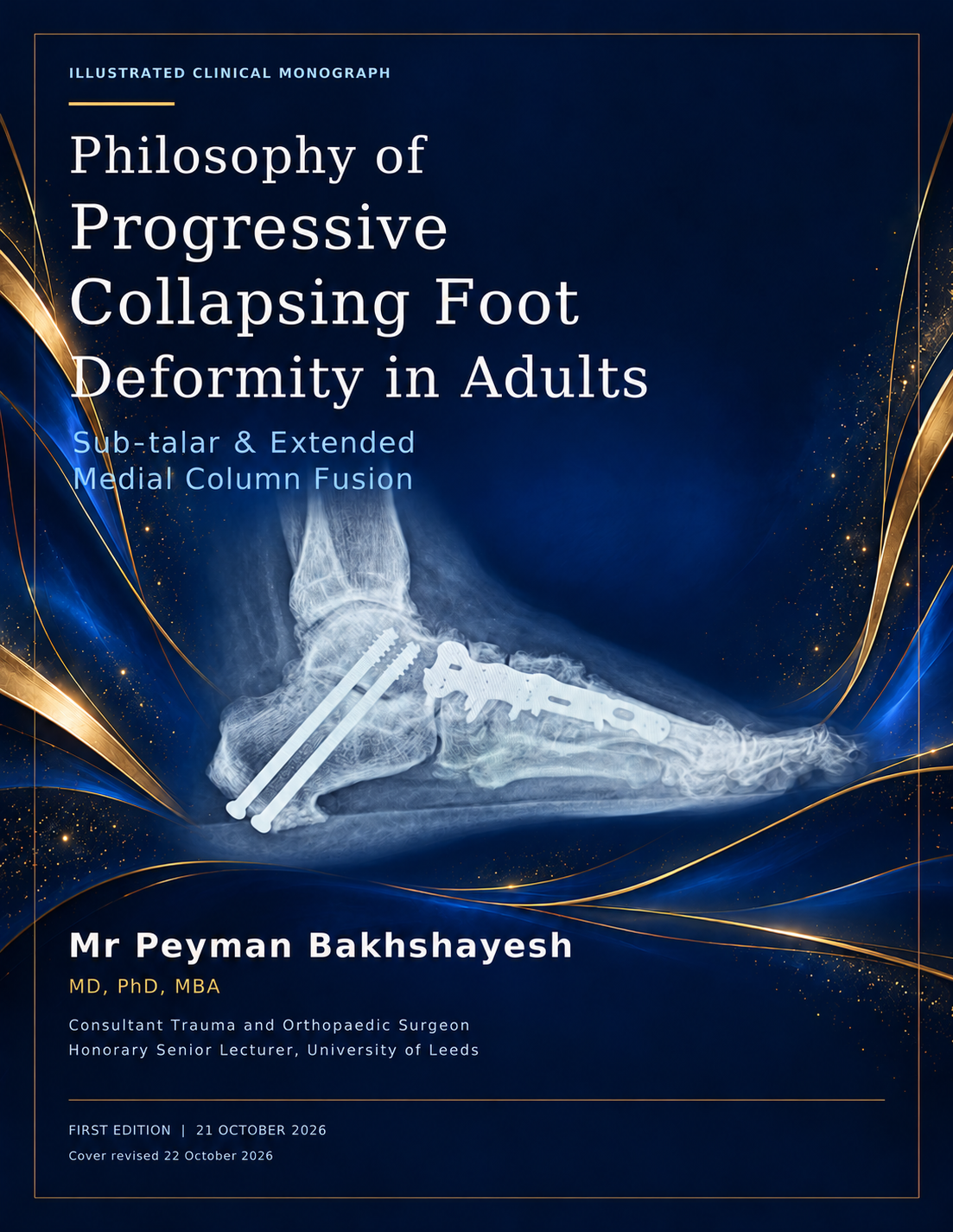
Philosophy of Progressive Collapsing Foot Deformity in Adults
Subtalar fusion and extended longitudinal medial and central column reconstruction.
Understanding why the arch collapses
The book explains PCFD and its relationship to adult acquired flatfoot, the contribution of the spring ligament, plantar fascia, tendon function, joint degeneration and loading, and the relevance of diabetes, neuropathy, bone quality and BMI.
It presents the Bakhshayesh proposed strategy of subtalar fusion with longitudinal support of the affected medial and central column using two subtalar screws and a medial plate. The discussion defines each potential fusion level and compares the strategy with osteotomies, tendon and ligament reconstruction, and more limited fusions.
Inside the book
- The author and the purpose of this book
- Terminology definition and classification
- Why the adult arch collapses
- Altered biomechanics and the aims of correction
- Clinical assessment and imaging
- Choosing between reconstruction and fusion
- The Bakhshayesh proposed reconstructive strategy
- Operative principles and technical decisions
- Rehabilitation healing and complications
- Retrospective study methods and source reconciliation
- Results from the available clinical records
- Interpreting outcomes and comparing the literature
- Completing the cohort study and testing the philosophy
Includes a postoperative radiographic atlas, a statistical appendix and linked references.
Retrospective findings and their interpretation
A new analysis of the 12-entry clinical summary table finds average reported pain ratings of 8.75 before and 1.67 after surgery. Five entries record a wound problem. The source table includes subtalar fusion or heel osteotomy cases, and its exact procedures and outcome timepoints are not fully established.
The book keeps these findings separate from an earlier ten-case manuscript reporting approximately six-week outcomes. It explains the need to reconcile the original operative and questionnaire records before claiming a uniform technique-specific outcome, a union rate or comparative superiority. No identifiable patient lists or questionnaires are reproduced.
Read and share
Open the complete illustrated book
View the book on the Foot and Ankle Surgery website · Explore the research library